
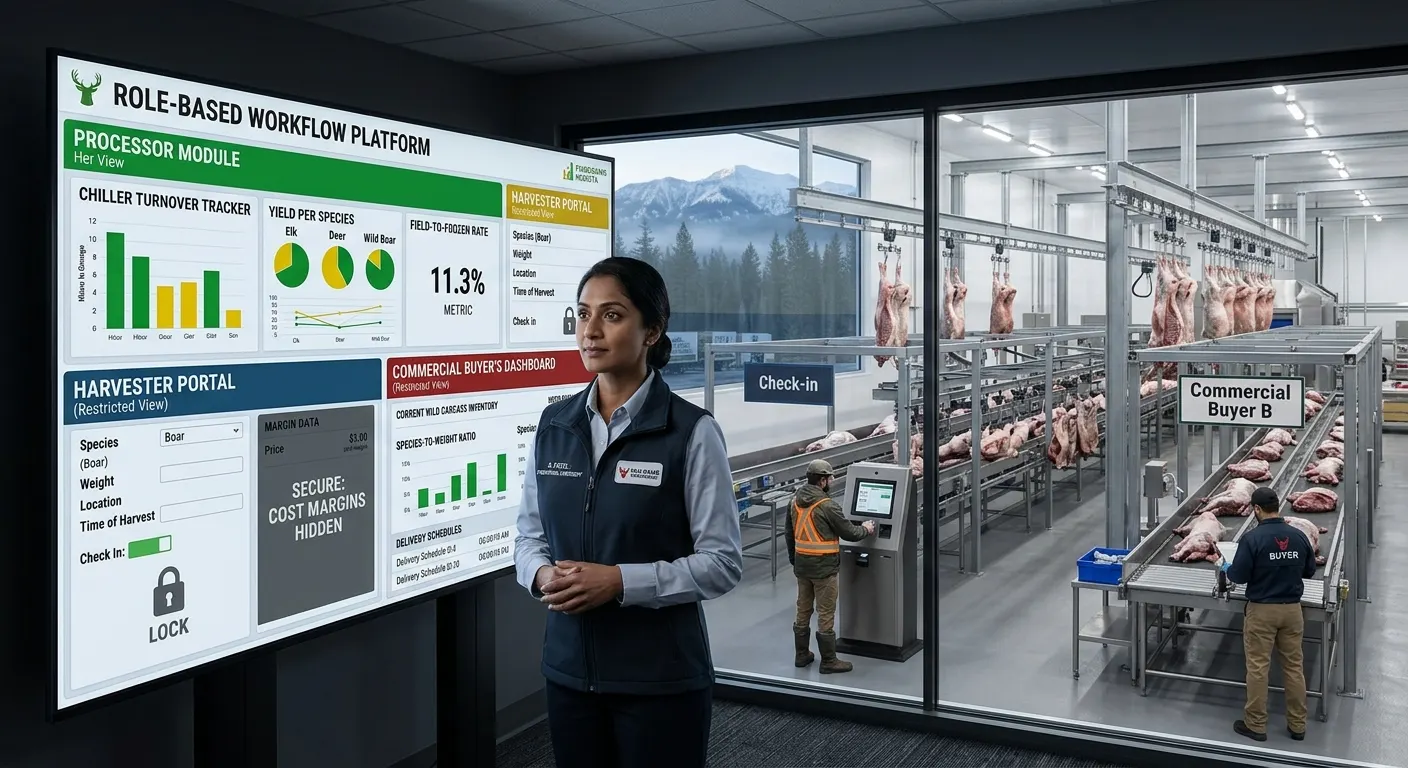
Commercial wild game processing involves multiple independent stakeholders: business owners, plant operators, independent field harvesters, transport drivers, and external commercial meat buyers. Coordinating these parties while protecting confidential business intelligence is a primary challenge.
The Problem with Shared Spreadsheets and Open Channels
When processors share stock updates via email spreadsheets or group chat channels, confidential data—such as harvester pay rates, supplier pricing, and operational margins—can easily leak to external buyers or competing harvesters.
Commercial roo buyers need to know verified carcass counts and chiller availability to plan purchasing, but they must never see internal cost structures or individual shooter remuneration.
Strict Database-Level Role Isolation
Wild Games solves this with strict multi-tenant architecture and role-based data firewalls. When commercial roo buyers log into their portal, financial fields and contractor identities are stripped at the database query level.
Buyers see live animal volumes, species breakdowns, and pickup readiness, while internal processor rate sheets and shooter earnings remain strictly confidential.
Key Takeaways
- Dedicated roo buyer portals provide verified volume counts without financial leakage
- Field shooters only see their own tally submissions and pay slips
- Business owners retain complete control over permissions and access logs
Experience Wild Games in Your Operation
Explore our field tallies, chiller stock tracking, and automated pay run workflows.
Summary
True collaboration requires security and trust. With Wild Games role-based portals, processors can streamline buyer relationships and field communications without ever compromising confidential data.